
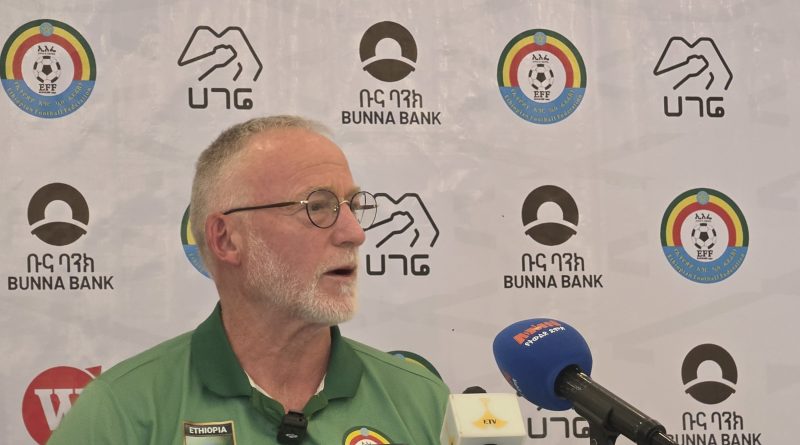
‘The Bulk of the Work Needs to Be Done at the Clubs’- Ziemer on Ethiopia’s Youth Football
Ziemer Urges Patience as Ethiopia U-17 Begin New CECAFA Campaign in Rwanda
Ethiopia U-17 head coach Benjamin Ziemer has urged supporters to manage their expectations ahead of the team’s CECAFA campaign in Rwanda, insisting that the current project is about much more than winning a youth tournament.
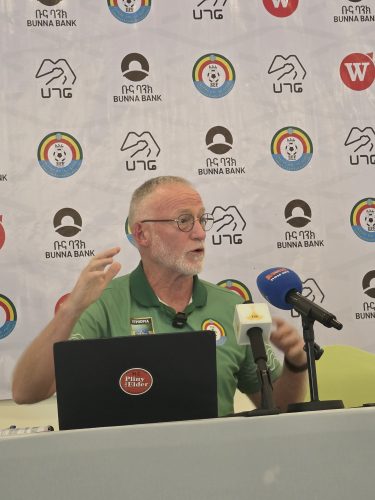
Ziemer is heading to Rwanda with a newly assembled Ethiopia U-17 side after a preparation period that has lasted only a few weeks. The American coach said the team is still in the early stages of development and that the immediate objective is to build a foundation for the future of Ethiopian football.
“I want to manage expectations of the people and of everyone. We will be underdogs at CECAFA,” Ziemer said during a pre-departure press briefing.
The coach explained that the preparation process began with trials from September 24 to 27, before the squad was finalised. The team has since completed 12 training sessions and played several preparation matches, including games against academy opposition and Ethiopian Electric’s senior team.
The 6-0 defeat to Ethiopian Electric, rather than discouraging Ziemer, gave him a clearer understanding of the work still required.
“We lost 6-0, but I was very satisfied,” he said. “It gave us a very clear picture of where we need to go.”
The short preparation period is one of the coach’s biggest concerns. Unlike the previous CECAFA cycle, when he had around six weeks to prepare the team, Ziemer has had considerably less time to develop match fitness, tactical understanding and cohesion.
He also highlighted the geographical limitations of the current squad, which is dominated by players from Addis Ababa.“This is a challenge. We have no players from around the country,” Ziemer said, pointing to the difficulties in creating a truly nationwide talent-identification system.
Last year’s U-17 side raised expectations after qualifying for the U-17 Africa Cup of Nations and coming within a penalty shootout of reaching Ethiopia’s first-ever FIFA U-17 World Cup.
Asked whether that achievement had changed expectations around the new campaign, Ziemer acknowledged the success but warned against assuming that the same outcome can automatically be repeated.
“I think there should be the expectation that Ethiopia qualifies every year for the U-17 AFCON,” he said, before adding an important qualification: “I’m cautioning you, that’s with a national team. So that’s why I started by saying, this isn’t a national team.”
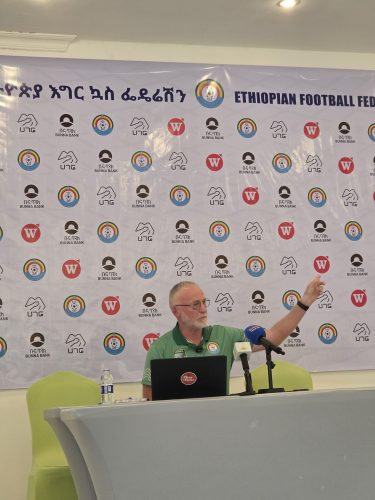
For Ziemer, the current group should be viewed as part of a development cycle rather than simply as a team expected to reproduce last year’s results.
“We’re three games in. We’re basically 12 trainings in,” he said. “We still have six days of work.”
He also questioned the CECAFA tournament format, arguing that young players need more competitive matches rather than fewer.
The current format, which guarantees some teams only two matches, is particularly frustrating for Ziemer because he sees international youth competitions as an opportunity to expose players to valuable competitive experience.
“This is all about giving experience to young players so that East Africa can perform better at the AFCON level in Africa,” he said. “So what do East African young players need? They need experience.”
One of the questions put to Ziemer focused on an issue that has repeatedly affected Ethiopian teams at international level: converting chances into goals.
The coach admitted that there is work to do, but argued that the problem cannot be solved by the national team alone.
Reflecting on the previous CECAFA campaign, Ziemer said Ethiopia had created more opportunities than Tanzania but failed to make them count.“We created more chances,” he said, citing his analysis of the match. Ethiopia recorded 10 shots on goal compared with Tanzania’s six, while possession was relatively even.Yet Tanzania scored four times.
“They were clinical,” Ziemer said.
The coach revealed that he had already begun addressing the problem in training, including teaching basic finishing techniques to some players.
“Today, I did shooting after training. I had to teach under-17 players how to do a half-volley,” he explained.
For Ziemer, that experience highlighted a much deeper issue in Ethiopian youth football.
“The bulk of the work needs to be done with their youth clubs,” he said.
He believes young players need significantly more time on the training ground, better facilities and stronger technical support if Ethiopia is to close the gap with the continent’s stronger football nations.“You have to train. The clubs have to train. You have to have proper equipment, proper fields, enough time,” Ziemer said.
Ziemer’s comments went beyond the immediate CECAFA campaign. He argued that Ethiopia’s long-term progress depends heavily on the country’s professional clubs taking youth development more seriously.
According to the coach, many young players currently train only a few days a week, while clubs in stronger footballing nations provide significantly greater training opportunities.
He contrasted Ethiopia’s current youth-development environment with examples from European football, where elite youth players receive hundreds of hours of training each year.
“If you can, year after year, just add cycle after cycle of these players that are identified, then you’ll start to see the results at the top of the senior team,” he said.
Ziemer also called for greater support for Ethiopian youth coaches, saying many of them are eager to improve but need facilities, financial resources and the backing of club leadership.
“The coaches want to work more seriously, but they need support. They need financial support. They need facilities. They need investment in youth development.”
He pointed to St George coach Milutin “Micho” Sredojević, who he said was working toward having one of the youngest squads in the Ethiopian Premier League, as an example of what can happen when club leadership supports a coach’s willingness to give younger players opportunities.
Perhaps the most important message from Ziemer’s briefing was that success at U-17 level should ultimately be measured by the players it produces for the senior national team.
“The goal, in the end, isn’t to win an under-17 at home,” he said. “It isn’t to win with the 17s or the 20s. It’s to develop players for the first team.”
He pointed to countries such as Senegal and Spain as examples of football development programmes that required sustained commitment over many years.For Ethiopia, he believes the same principle must apply: identify players early, develop them consistently, move them through the U-15, U-17 and U-20 levels, and eventually produce stronger senior internationals.
“This is a project that has to be—there has to be sustained commitment from the federation,” Ziemer said. “There has to be sustained commitment from the EPL clubs and from the people working on the ground in order for us to, over time, achieve the goal.”That makes the Rwanda trip another step in a much longer journey.
For Ziemer, the immediate CECAFA results will matter, but they are only one part of a broader project aimed at changing how Ethiopia develops its next generation of footballers.
The challenge now is to build a team in a matter of weeks.The bigger challenge is to build a system that can keep producing them for years.


