

“Likina’s Best Version Is Yet to Arrive” — An Exclusive Interview with Alberto García Pérez
When Likina Ambaw crossed the finish line to claim another global title, it was not simply another victory for the young Ethiopian athlete. It was another sign of how quickly her career is developing and according to her manager Alberto García Pérez, there could be much more to come.
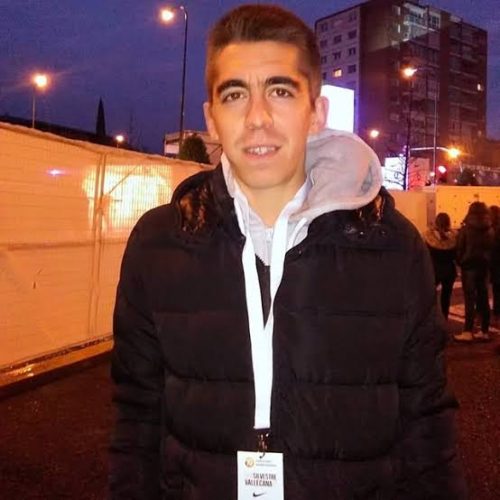
Following Likina Amebaw’s spectacular world titles, we sat down for an exclusive interview with the man behind her success: her husband, coach, and manager, Alberto García.
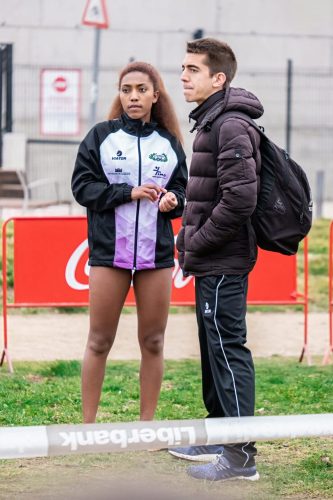
Alberto García Pérez is a Spanish athlete representative accredited by World Athletics and the Royal Spanish Athletics Federation, with experience managing athletes competing across track, road running and cross-country. His work has brought him closely into Ethiopian distance running, including through his representation of Likina Amebaw, whose career he has helped guide as both her manager and husband.
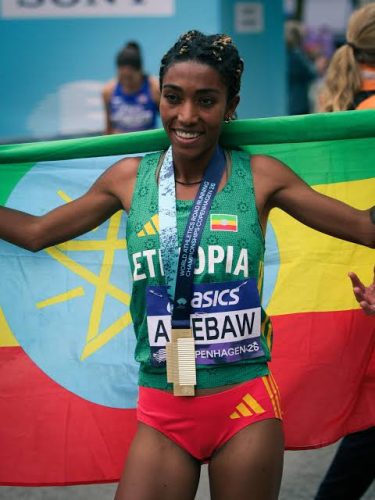
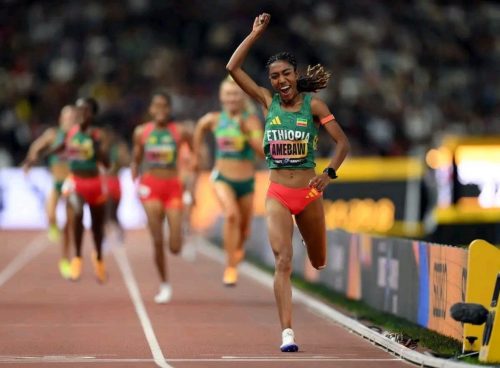
Likina has recently enjoyed a remarkable period, winning two global titles on two different surfaces in less than a week, underlining her ability to perform both on the track and on the road.
Behind that progress is a team that has been working to guide her career and prepare her for the demands of international competition. At the centre of that team is García Pérez, who has worked closely with Ambaw and has developed a relationship with her that goes beyond athlete and manager.
When Alberto García Pérez first met Ethiopian distance runner Likina Ambaw in 2018, he did not immediately imagine the path that would eventually take them to the highest level of international athletics.
Likinqa had travelled to Spain with a group of runners to compete in the Alcalá Marathon. García Pérez, who would later become her manager and coach, was concerned that such a young athlete was already focusing on long-distance races. He even tried to convince her then-coach to change direction.
“I did not like the idea of such a young athlete focusing on long distances,” García Pérez recalled. “I tried to change her then-coach’s mind, which even led to an argument with him. I was firmly convinced that Likina needed to develop in shorter distances first.” But what immediately stood out to him was not simply her physical ability. García Pérez saw an athlete with an impressive aerobic base and, more importantly, the mentality required to reach the highest level.
“Many athletes have quality, but not all of them have the hunger required to be champions,” he said. “Likina definitely had that hunger.”
That initial assessment has since developed into a relationship that goes far beyond the traditional athlete-manager partnership. García Pérez manages Likina’s competition calendar, sponsors and logistics, but he is also the person responsible for her daily training and physical preparation.
“As a manager, I do what the rest of my colleagues do: I manage the competition calendar, sponsors, and logistics,” he explained. “However, in our case, there is a distinct factor: besides being her manager, I am her coach and the one who handles her daily training and physical preparation.” There is also a deeply personal dimension to their relationship. Likina is García Pérez’s wife, and the two have been together for eight years.
“She is a spectacular woman, beautiful both inside and out, with a very kind heart,” he said. “I love her and I am deeply in love with her.” Working closely with Likina has also changed García Pérez himself. The lesson he says he has learned most strongly from her is the importance of persistence.
“Above all, I have learned from her that giving up is never an option in life,” he said. “She has shown me that even when situations seem very difficult, nothing is impossible if you truly pursue it.” For García Pérez, that mentality is closely connected to what he considers Likina’s greatest athletic strength: her willingness to work.
“Her greatest strength is her immense capacity for work,” he said. “Likina is an athlete who is always ready to work and give her maximum effort, no matter how tough the plan is.”
That work ethic was central to the preparation behind her recent success. Likina won two world titles on different surfaces in less than a week, producing victories on the track in Budapest and on the road in Copenhagen.
Rather than attempting anything radically different between the two competitions, García Pérez said the focus was on preparation, recovery and trusting the athlete’s ability to respond.
“The key is that we were fully prepared to face both competitions, and I trusted Likina’s recovery capacity completely,” he explained. “This double victory is the fruit of daily work over many months.” With the races so close together, the plan between competitions was straightforward: recover properly and arrive at the second starting line as fresh as possible.
“Therefore, the plan between the competitions was simply to recover well and make sure she arrived at the starting line as fresh as possible,” he said. “I believe we achieved that perfectly.”
Despite the significance of two world titles, García Pérez does not believe Likina has reached her ceiling. “Likina’s progress is excellent,” he said. “These two world victories are going to give her a tremendous extra boost of morale and confidence.” For him, the most encouraging aspect of the recent victories is the possibility that they are only another step in a much longer development. “I am convinced her best version is still to come; she still has plenty of room to improve,” he said.

“The Olympic Games are the ultimate goal in any athlete’s life. It is the highest peak, and I believe we have to fight with everything we have to get there,” García Pérez said. Rather than identifying one specific race as the next defining moment, he wants the focus to remain on refining the details of Likina’s current performance.
“Beyond a specific race, the focus is on continuing to polish the details of her current performance,” he explained. “With the confidence gained over these weeks, any high-level stage will be an opportunity to keep breaking barriers.” Looking further ahead, García Pérez hopes Likina can become much more than a successful athlete.
“As I mentioned, her best version is yet to arrive if her health allows it,” he said. “I hope she can become a legendary athlete, the kind of role model that Ethiopian children in schools dream of becoming. That would be something wonderful for the future of the country’s athletics.”
García Pérez has developed a strong personal connection with Ethiopia. He said he has visited the country several times, loves it, and has always wanted to work with Ethiopian athletes.
But he also believes there are challenges in developing young Ethiopian runners, particularly when it comes to the relationship between athletes, managers and long-term career planning.
“I like Ethiopia very much; I have been there several times and I love it,” he said. “However, it is sometimes difficult to guide young athletes because they often focus more on material things rather than listening to sports advice.”
He gave the example of young athletes asking for shoes and sponsorship before considering the longer-term development of their careers.
“The first thing a young athlete asks for when you want to build them up and make them better is two pairs of shoes and a sponsor,” García Pérez said. “I understand it is necessary, but sometimes a manager who knows what they are doing and traces a long-term path is more valuable than one who simply gives you footwear and leaves you forgotten for the rest of your career.”
He said this has been particularly frustrating because of his desire to work with Ethiopian athletes. “It hurts me because I have always wanted to do great work with athletes from Ethiopia and it has not been easy,” he said, adding that some athletes had even lived with him and Likina for months without appreciating the support they had received.
He speculated that the situation may be different in Addis Ababa, where, in his view, “there are very large agencies and they have everything under their control.”
Despite those challenges, García Pérez has a highly positive assessment of Ethiopian distance-running talent. “Athletes from Ethiopia are exceptional and gather every possible quality,” he said. He pointed to altitude training and the country’s natural environment as important advantages, highlighting the forests, paths and roads available for preparation. He also believes Ethiopian children’s active lifestyles contribute to their development.
“They play outside and move around a lot since childhood, which gives them an extraordinary aerobic development by the time they reach adulthood,” he said. He also highlighted what he described as a varied and natural diet, as well as the mental strength of Ethiopian athletes.
“They have everything to succeed,” García Pérez said.
For him, that athletic culture is also shaped by the country’s history of distance-running success. He specifically mentioned Kenenisa Bekele, Haile Gebrselassie and Tirunesh Dibaba, saying that generations of people have grown up watching their triumphs.
“They made us fall in love with Ethiopia and athletics,” he said.
One of the most sensitive parts of Likina’s career has involved her nationality and where she trains.
García Pérez said Likina has had the opportunity to change her nationality to Spain but has chosen to remain Ethiopian. “Likina has had the opportunity to change her nationality to Spain, but she loves Ethiopia,” he said. “I always support her decisions because I only want the best for her; I love seeing her compete for her native country and it deeply moves me to hear the national anthem with her at the top of the podium.”
He also addressed the issue of her training base in Spain and what he described as differences with the Ethiopian Athletics Federation over where she should prepare. According to García Pérez, the federation prefers Ethiopian athletes to train in their home country, while he believes the location of training should not determine whether an athlete can represent Ethiopia successfully.
“The only point of debate is that the Ethiopian Federation prefers its athletes to train in their home country,” he said. “I believe this is not a matter of geography.”BHe argued that Likina’s development in Spain has played an important role in her current level. “If Likina trains in Spain with me and has reached this world-class level, forcing her to change now could be counterproductive,” García Pérez said. “In Spain she trains well, feels comfortable, and has developed her entire elite career.”
He believes training abroad and representing Ethiopia are compatible. “The Federation needs to understand that training in Spain and competing for Ethiopia are perfectly compatible; there is no issue at all,” he said. “What matters is the justice of valuing the results rather than the place of training.”
At the same time, García Pérez expressed his appreciation to Ethiopian Athletics Federation president Sileshi Sihine for supporting Likina’s involvement with the national team. “I want to express my deep gratitude to Sileshi Sihine, president of the Ethiopian Athletics Federation, for his attention toward Likina and for his total willingness to have her be part of the national team,” he said.
For García Pérez, Likina’s recent achievements have repaid that confidence.
“Likina has repaid that vote of confidence with these two world titles, so both sides are very happy,” he said.
García Pérez believes the transition from gifted athlete to successful professional requires much more than natural ability. “From talent to success, there is a gap that can only be crossed with hard work and intelligence,” he said.
He emphasized the importance of the team surrounding an athlete and the trust required between the athlete, coach and manager.
“Athletes need to be very well directed by their coaches and managers, and they have to trust their team blindly,” García Pérez explained.
For him, elite athletics is fundamentally a collective process. “This is teamwork: if the coach sets a program and the manager tells you where to run, the athlete must trust them,” he said. “No one reaches success alone; it is a team effort.”
That philosophy is also the message he wants to pass on to young Ethiopian athletes dreaming of international competition: trust the process and the people working with you.
“My advice to young athletes is to trust the processes and the teamwork,” he said.
García Pérez describes himself as half Spanish and half Ethiopian and says his connection to the country goes beyond his professional relationship with Likina. “I am half Spanish and half Ethiopian; I love Ethiopia and my wife is from there,” he said. His ambition is therefore not simply to see Likina succeed individually. He wants to see the Ethiopian flag continue to reach the top of international athletics.
“My only wish is to see the Ethiopian flag and hear its national anthem at the very top for many years to come,” he said.
He also pledged to continue contributing to that goal. “For my part, I will continue to contribute everything I can to make it so, just as I am sure the executives, coaches, and members of Ethiopian athletics will do,” García Pérez said.
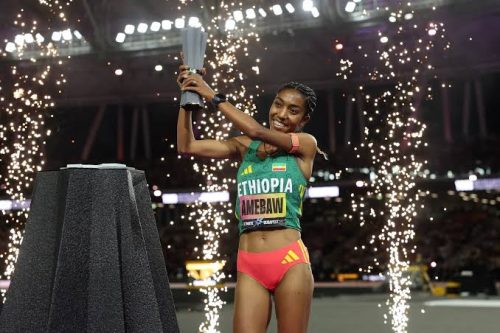
For an athlete he first met as a young runner in Spain in 2018, the journey has already produced world titles. But for her manager, coach and husband, those victories are not the conclusion of Likina Ambaw’s story. They are another step toward what he believes could be the best version of her career.
And, in García Pérez’s words, “her best version is still to come.”


