
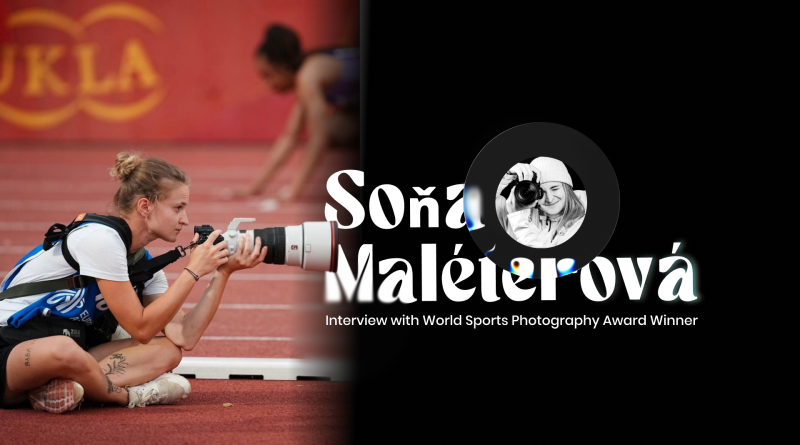
The Art of Sports Photography: Interview with World Sports Photography Award Winner Soňa Maléterová
In athletics, the drama is often thought to end at the finish line. But sometimes the most powerful moments happen just after the race. Capturing those invisible moments is the work of sports photographers like Soňa Maléterová.
Maléterová is a professional sports photographer and staff photographer at Getty Sport from Slovakia whose work focuses on sports photography and commercial productions. Her images have appeared in major international competitions, including global track-and-field events organized by World Athletics.She also covers Formula 1 races, and her work has been featured in the Financial Times, The Athletic, and other international sports outlets.
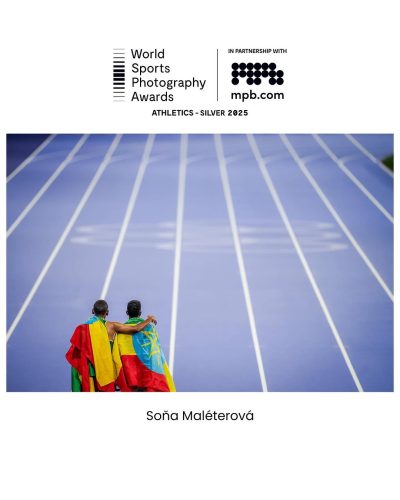
One of her most celebrated images features Ethiopian long-distance runners Selemon Barega and Berihu Aregawi walking together with their flags was ranked among the top sports photos in the world for athletics in 2025 after the men’s 10,000-metre race at the 2024 Summer Olympics. The photograph was shortlisted and later earned silver in the athletics category at the World Sports Photography Awards.
In this interview, Maléterová speaks about her journey of sport photography and the invisible stories behind sport.
Growing up in a small village in eastern Slovakia, Maléterová spent much of her childhood outdoors exploring nature. That environment shaped both her personality and her artistic vision. “As a kid, I was on my bike all the time, just being outside,” she recalls. “I was always a very curious child who loved exploring the world around me.” Over time, that curiosity evolved into a desire to document what she was seeing. Photography became the tool through which she could capture her observations. As she explains, “As I grew up, I realised it was nice to capture my observations. The camera felt like someone else was sharing my curiosity with me.”
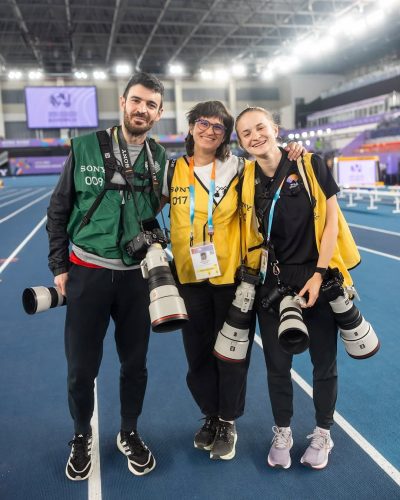
Maléterová’s connection to sports photography began while she was still involved in athletics herself. During her school years she competed in track and field, but around the age of fourteen she realized that she was more fascinated by moments around the competition than by the race itself. She remembers a school athletics event where she chose photography over running. “I used to do athletics, but around the age of 14 I realised I loved capturing moments,” she says. “I even had a small argument with my teacher because I didn’t want to compete ; I wanted to photograph the event instead.” That moment marked her first experience with sports photography.
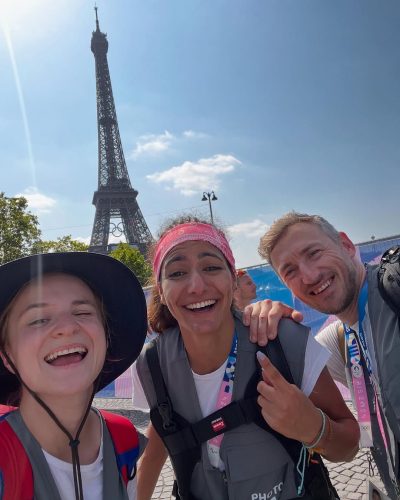
According to Maléterová, sports photography is often misunderstood by people who think it is simply about taking pictures during a match or race. In reality, it requires a deep level of observation and creativity. “Sport photography is specific mainly because it’s very hard to create a clean shot ; there is always a lot of visual chaos,” she explains. In large sporting events many photographers share similar positions around the field or track, which means capturing something unique requires careful attention to detail. “Every photographer has almost the same access. That means you have to observe much more carefully and in detail to create something truly original.”
If photographers fail to notice subtle moments , she says, they will likely produce images that look identical to everyone else’s work. “If you don’t pay attention to small details, you will end up with the same pictures everyone already has.”
Another essential skill in sports photography is prediction. Because sport moves quickly, photographers cannot wait for moments to happen; they must anticipate them before they occur. For Maléterová, understanding the rhythm and logic of the sport is crucial. “Prediction is one of the most important skills in sports photography,” she says. “You always need to be two or three steps ahead of the action.” Without understanding the sport itself, she explains, it becomes almost impossible to capture decisive moments. “Sport happens very quickly ;you don’t have time to think.You have to anticipate.”
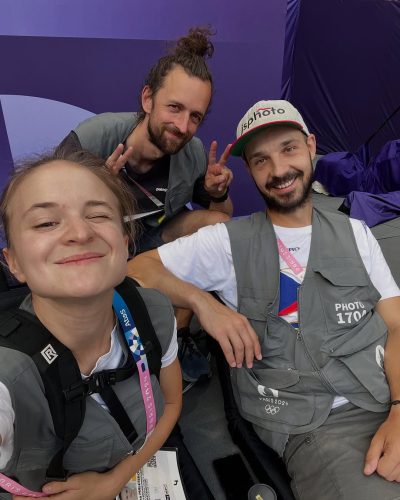
Among the many sports she photographs, athletics holds a special significance for her because it reveals the human stories behind competition. For Maléterová, the athletes themselves, their journeys, sacrifices, and emotions, are what make athletics photography powerful. “It’s never just about the sport,” she explains. “It’s about the athletes and everything they had to do just to reach the starting line.” That perspective shapes the way she looks for moments beyond the obvious victory celebrations, focusing instead on subtle interactions and quiet reflections that reveal deeper meanings.
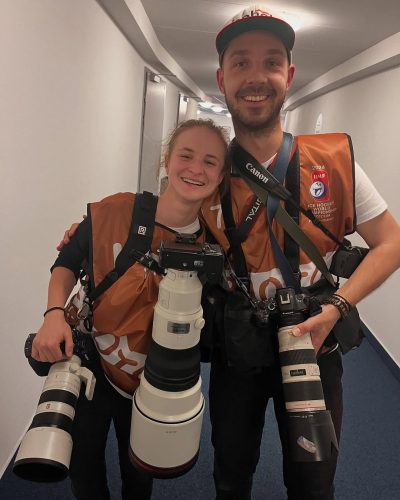
When Maléterová speaks about athletics photography, she says, “Covering athletics alone requires a very high level of prediction. You need to stay focused and, most importantly, have a clear plan. Otherwise, you will get lost very quickly. There are usually 4 disciplines happening at the same time in the stadium. Without planning, you can easily become overwhelmed. Another very underrated aspect is physical condition. You need to be prepared to walk around 12 km per day, often running around the stadium with all your equipment — which can weigh around 10–12 kg – all that in a short time and with a big stress level.”
This approach became particularly clear in her famous photograph of Ethiopian runners Selemon Barega and Berihu Aregawi walking together with their flags after the Olympic 10,000-metre race. While most photographers focused their cameras on the gold medalist Joshua Cheptegei, Maléterová deliberately chose a different perspective. She moved to a higher and less typical position inside the stadium and began observing the environment rather than the obvious action. “I took a risk and moved to a different position ,not a typical photo spot,” she explains. “I wanted something different than just shooting the finish line from the usual angle.” As the celebration focused around the winner, she noticed Selemon and Berihu standing together on the track. “Selemon and Berihu hugged and stood completely still, while the whole world was celebrating the winner,” she remembers. “They had their own moment.” For Maléterová, that moment represented something deeper than a race result. “They were just standing there, looking around, realizing how far their journey had taken them to the Olympic Games.”
When she later submitted the photograph to the World Sports Photography Awards, she believed the image carried a strong emotional message. “I felt the power of the image that it could tell a story without words,” she says. Then, the photograph earned silver recognition in athletics photography, an achievement that brought international attention to her work. Maléterová views awards mainly as encouragement. What matters most to her is the story the image tells. “You could feel the emotion even without seeing the faces,” she explains. “I just hoped I wasn’t the only one who saw it that way.”
For young photographers around the world, including those in countries with fewer resources such as Ethiopia, Maléterová offers her advice. Success, she believes, depends more on dedication than on where someone comes from. “Stay consistent. Be patient,” she says. “It doesn’t matter where you come from. Dream big, work even harder.” Opportunities may take time, but she believes they eventually appear for those who keep improving their work. “Sooner or later, an opportunity will come. When it does, give it 110%. Show what you have never less.”
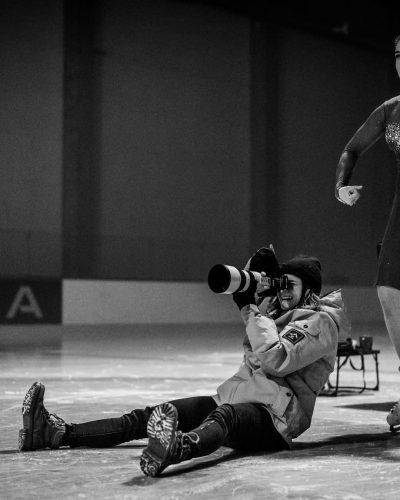
Curiosity remains the driving force behind her work. Even after photographing Olympic finals, world records, and major competitions, she believes every event still offers something new to discover. As she reflects at the end of the conversation, “The most beautiful state is unfulfilled curiosity that’s when we become explorers, finding something interesting in the uninteresting.”


