

Back After 22 Years: The Story Behind Ethiopia’s U-17 Victory
After more than two decades away from continental youth football, Ethiopia’s U-17 national team has finally qualified for the CAF U-17 Africa Cup of Nations, marking a historic return after 22 years. Beyond the qualification itself, what makes this achievement unique is the transformation seen in the team’s culture and preparation. This changes can be attributed to the leadership of American head coach Benjamin Zimmer.

In African youth football, one of the most frequently raised concerns is the issue of proper age compliance. In this year’s CECAFA qualifiers, however, Ethiopia stood out positively by fielding players who genuinely appeared to fall within the correct age category. For many observers, this was the first encouraging sign of a shift toward integrity and professionalism in the youth system.

A key part of this progress has been shaped by the presence of American head coach Benjamin Zimmer, whose leadership style as resonated with his players. Ethiopian Football Federation international scout David Beshah, who followed the team closely throughout their preparations, described the coach’s approach in simple and direct terms: “He treats the players equally. He talks to them. He tells them straight what is good and what is bad, and they know where they are. They know what to improve.” David emphasized how important that honesty becomes when dealing with form and team selection, explaining, “When you are on the bench, you know why you are on the bench. When you’re playing bad, he tells you. He also tells you when you play good, he encourages you.”

For the players, this way of working was something new. As David put it, “For the players, it is kind of new experience to have such kind of relationship with the coach .That trust and transparency soon showed themselves in competitive matches. Despite the fact that performances were never completely perfect, the team’s collective spirit stood out. “Not everything was perfect, but at least what they have, they really fight ,they run for each other. Even the bench players, even the ones who were sitting on the tribune, they were running on the pitch after the game. You can see this is something special,” he said. Off the field, team-building efforts helped deepen these connections.Group dinners and constant interaction outside training created stronger emotional bonds within the squad, turning a group of individuals into united team committed to fighting for each other.
David attended almost every training session during the final two-week camp before the CECAFA tournament and witnessed the shift firsthand: “Two weeks before the tournament started, I was nearly every day at training. The intensity in training, it’s tense. You always have to be alert, even tactical-wise. The intensity was definitely new for the players.” Daily improvement became clearly visible throughout the camp. As he noted, “Like I said, I was nearly every day there, so I can see the improvement every day. In this short period of time, they have done a great job.”
Despite celebrating qualification, David remains focused on what lies ahead. For him, reaching the Africa Cup of Nations is only the beginning: “Of course qualifying is historic thing, but we don’t go there to just play some games. We really need to be prepared as good as possible. If we give our best, we will see what we can do there. Now we have to go and really give it all.”

The U-17 qualification is also part of the broader national football development program known as “Road to 2029,” a joint initiative between the Ethiopian government and the Ethiopian Football Federation aimed at rebuilding the country’s football system — from grassroots development to international competitiveness. The cooperative efforts of state institutions and the federation have provided critical logistical, financial, and structural support to youth programs, allowing projects like this U-17 setup to take shape. In recognition of the team’s historic qualification, the government awarded the U-17 squad a total prize of 10 million Ethiopian birr.
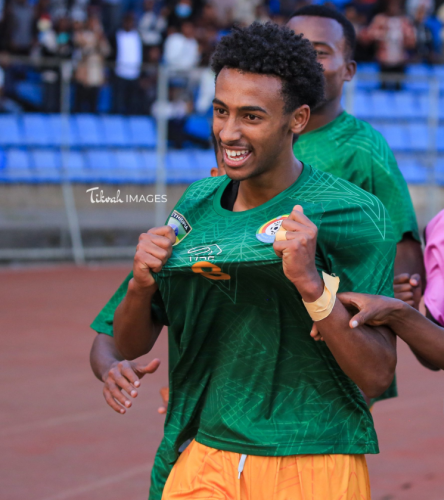

On the individual level, two standout performers quickly became national talking points. Dawit Kasaw, who finished as top scorer of the CECAFA tournament with eight goals, and team captain Biniyam Abreha have reportedly signed with Sheger Kenema, according to Hatrick Sport. Their domestic transfers, however, sparked debate among fans and commentators. Many argue that moving through the traditional local development system risks limiting their growth at such a crucial stage, fearing that Ethiopian club structures may not yet provide the optimal environment for elite youth development.

Insiders close to the federation, however, indicate that the players remain eligible to pursue international opportunities should credible offers arise from clubs or academies abroad. The situation reflects a wider tension in Ethiopian football, which is balancing the strengthening of domestic leagues with the need to maximize international development for top prospects.
This U-17 qualification is not only about tournament tickets.It represents a bigger statement about what Ethiopian youth football can become. Transparent leadership, honest communication, disciplined training, attention to ethical standards such as proper age compliance, and a team-first mentality have proven their strength under Benjamin Zimmer’s guidance.

